Samuel Almansa is a visual artist from Mallorca whose practice spans painting, sculpture and audiovisual media. He studied Fine Arts at the Faculty of Fine Arts in Cuenca, where he explored a range of disciplines, including video, installation, painting and mural art, before discovering airbrushing as a fundamental tool in developing his own artistic language.
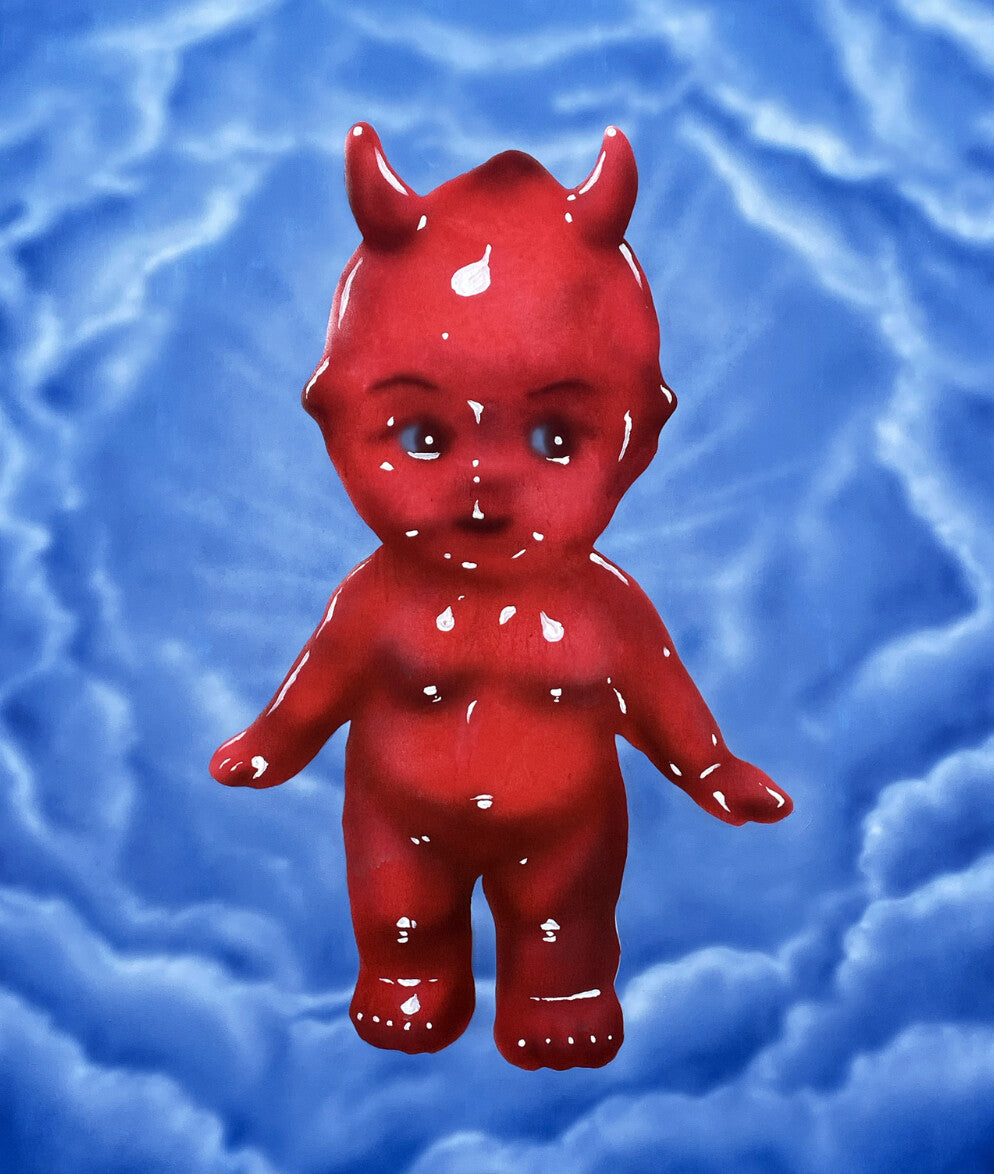
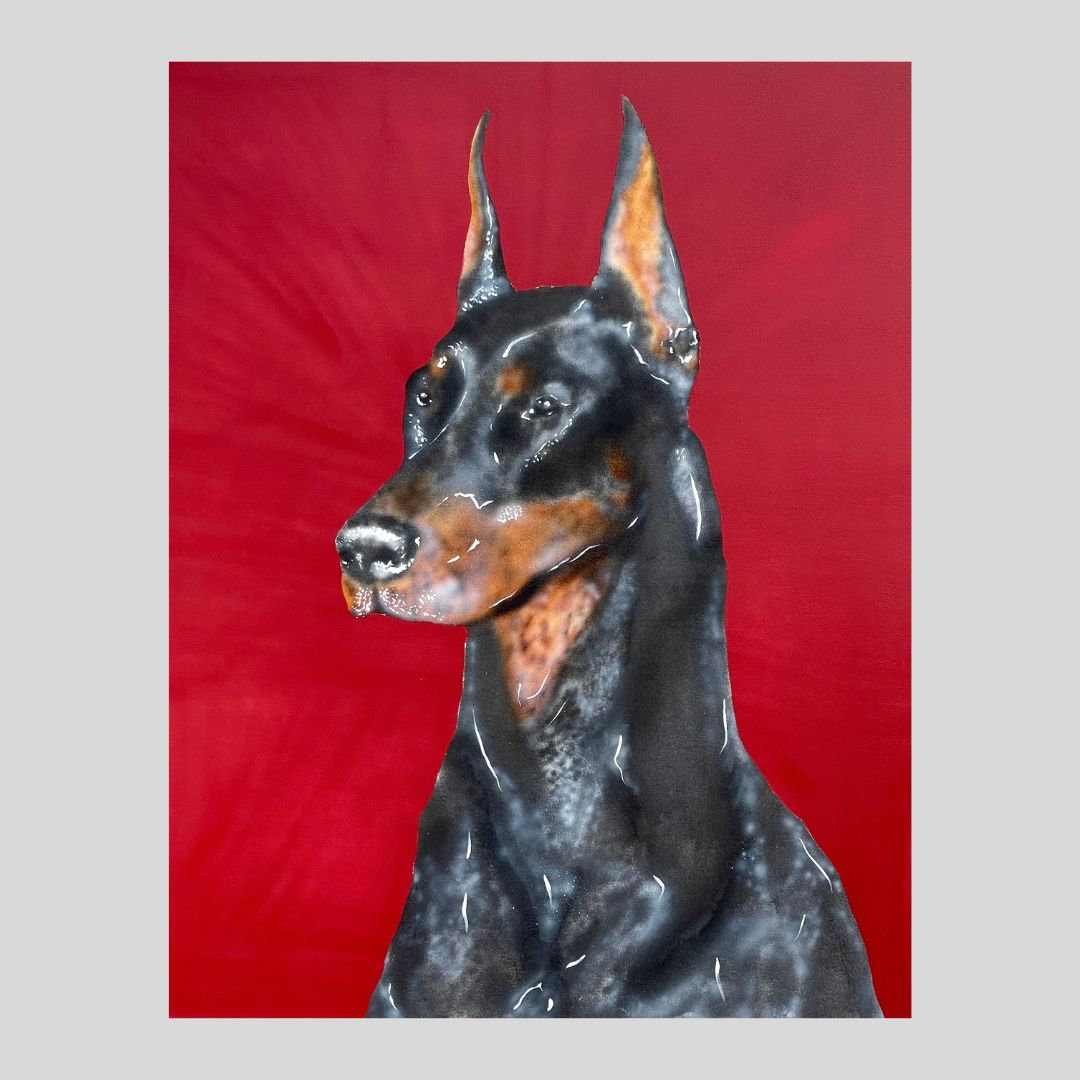
His work is characterised by a glossy, seemingly delicate aesthetic, inspired by his mother’s porcelain figurines, which he was forbidden to play with as a child. Through airbrushing, Almansa creates polished surfaces, almost three-dimensional forms and reflections of light that have become some of the most recognisable elements of his work. This fascination with materials and their visual qualities extends to his sculptural practice, where his characters take on a new physical dimension through materials such as iron. Its hardness, strength and weight contrast with the delicate, seemingly fragile forms of his figures, further exploring the tension between the cute and the imposing, and between the vulnerability of his characters and the physical and symbolic power of the material.
Fragility lies at the heart of his artistic universe. Animals, small characters and everyday objects are transformed into innocent-looking figures, almost like porcelain pieces that could break at any moment. Beneath their flawless surfaces, tenderness, humour, nostalgia and irony coexist. His work explores the contradictions between the adorable and the unsettling, the resilient and the vulnerable, appearance and what lies beneath it.
Much of Almansa’s visual world is rooted in his hometown of S’Arenal, Mallorca, where he grew up surrounded by a peculiar mix of working-class grit and touristy glitz. A place where kitschy souvenir shops rub shoulders with sleepy early-morning truck drivers; where souvenir towels and family traditions collide, and tuning, reggaeton, techno and table football share the space with flag-draped bars and gold chains.
His work is not about nostalgically reviving the 1990s and 2000s, nor about following the trends that bring their aesthetics back into fashion. Instead, Almansa highlights the enduring relevance of visual references that stick to his hometown like chewing gum beneath the counter of his local taberna. For him, it is not a revival of the past, but a portrait of a popular culture that spans generations and remains very much alive in his native Mallorca.
Between popular culture and the delicacy of porcelain, Almansa builds a distinctive universe in which the familiar becomes strange, and where even the sweetest figures can conceal deeply human emotions.